How to De-Stress at Home: 15 Activities You Can Do Tonight

Updated: Jun 13
The evening is the most important window you are probably wasting

Most of what determines the quality of your sleep, your nervous system state the following morning, and your general capacity to handle pressure well, happens in the one to two hours before you go to bed.
Most people spend that window in a way that makes everything worse.
They scroll. They catch up on work. They watch something intense. They replay the day. They stay switched on until the moment they try to switch off, and then wonder why the switch doesn't work.
De-stress activities do not have to be complicated or time-consuming. De-stressing at home is not about finding dramatic changes to your life. It is about what you do with those one to two hours tonight. The 15 de-stress activities below are all things you can genuinely do this evening. They are not aspirational. They are available, low-friction, and backed by research on how the nervous system actually comes down from a state of activation.
You do not need to do all 15. Pick two or three. That is enough to feel a real difference by the time you lie down.
Why what you do at home in the evening matters so much
Here is something worth understanding about stress and recovery. Your body is not designed to stay in an activated state indefinitely, but it also does not come down automatically the moment your working day ends.

The stress hormones that helped you get through a demanding day, cortisol and adrenaline, do not switch off because you walked through your front door. Cortisol is the body’s primary stress hormone. It helps you stay alert and responsive during challenges, but when it remains elevated into the evening, it becomes much harder for the body to transition into rest and recovery. They need somewhere to go. They need specific conditions to resolve. Without those conditions, you carry the day's activation straight into your evening, your sleep, and the next morning. Over time, this is what tips manageable stress into chronic stress.
Over time, this is what tips manageable stress into chronic stress. If this pattern feels familiar, you may find it helpful to understand the common signs and long-term effects of chronic stress, and why recovery matters as much as the stress itself.
The good news is that the conditions for recovery are not complicated. They are quiet, familiar, often free, and almost entirely within your control. They just require a little more intention than defaulting to a screen for two hours before bed.
Because here is something worth sitting with: watching television, scrolling Instagram, keeping up with the news, these are not unwinding. They are stimulation. Your brain stays switched on, processing content, responding to images, comparing, evaluating. It does not look like activity. It feels like rest. But physiologically, it is still activation. True recovery requires something different.
The 15 de-stress activities
1. A slow evening walk

Twenty minutes outside, walking without a destination or a podcast, is one of the most reliable de-stress techniques available. Moving your body metabolises cortisol in a way that almost nothing else does. The combination of physical movement, natural light at dusk, and an absence of digital input gives the nervous system exactly what it needs to begin coming down.
It does not have to be vigorous. In fact, slower is often better in the evening. You are not trying to raise your heart rate. You are trying to help your body complete the stress cycle it began during the day.
2. A warm shower or bath
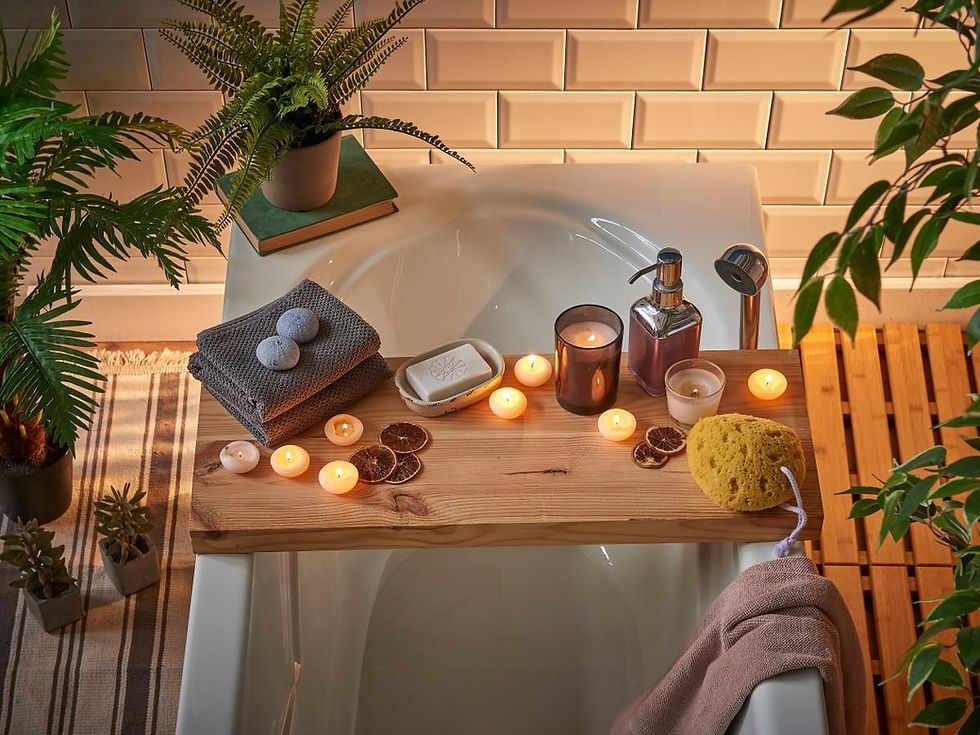
Warm water on the body reliably activates the parasympathetic nervous system, which is the rest-and-digest state that stress suppresses. The warmth also raises your body temperature slightly, and the subsequent cooling that happens afterward is one of the most reliable triggers for sleep onset. A 20-minute bath or a warm shower an hour before bed is not an indulgence. It is a physiological tool.
3. Gentle stretching for 5 to 10 minutes

Stress lives in the body before it surfaces as a conscious thought. If you’re wondering how to relax your body after a stressful day, gentle stretching is one of the simplest places to start. Most people who are stressed are carrying it in their shoulders, their jaw, their hips, and their chest, often without noticing. Five to ten minutes of gentle stretching, no video required, no programme necessary, just moving through the areas where you feel tightness, releases the physical component of stress in a way that mental techniques alone cannot reach.
Two to three minutes is enough to make a difference. The consistency matters far more than the duration.
4. Lower the lighting an hour before bed

The intensity and colour temperature of light in your home directly affects melatonin production, which is the hormone that prepares your body for sleep. Bright overhead lighting signals to your brain that it is still midday. Dimming lights, switching to lamps, or even lighting a candle an hour before you plan to sleep creates an environmental shift that supports the nervous system's natural wind-down process without you having to do anything else.
5. Chamomile tea or any warm drink without caffeine

This is smaller than it sounds, and more effective than people expect. The ritual of making and holding a warm drink signals the body to slow down. Chamomile specifically has mild anxiolytic properties. More broadly, the act of doing something slow and deliberate with your hands, in quiet, is itself a de-stress technique. The key word here is without caffeine. Caffeine takes approximately eight hours to clear your system. A coffee at 3 p.m. is still meaningfully affecting your sleep at 11 p.m. Whatever you drink in the evening, let it be warm and calming rather than stimulating.
6. Three minutes of extended exhale breathing
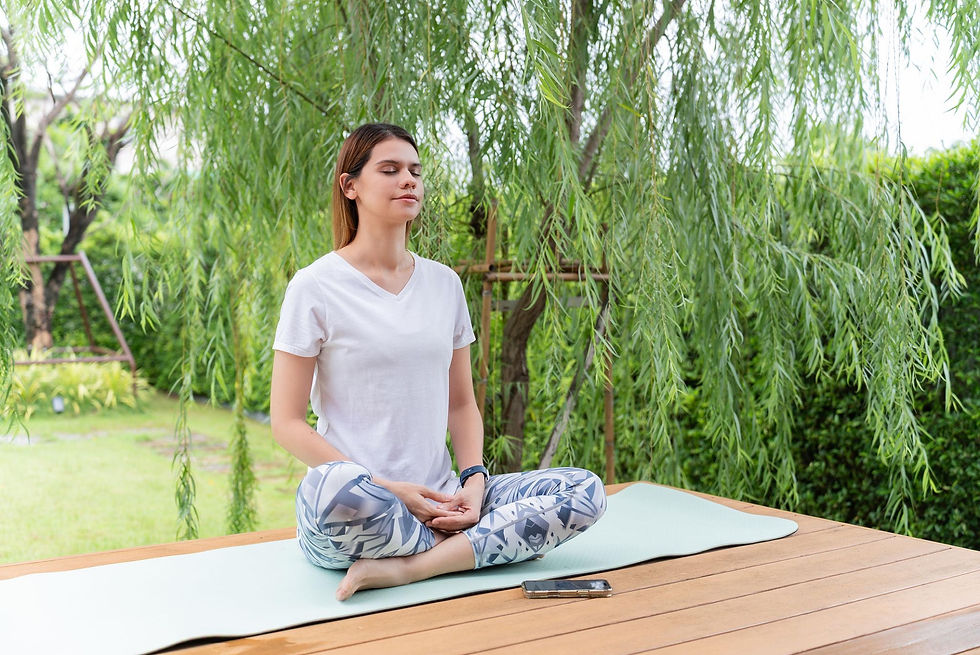
Breathe in for four counts.
Breathe out for six to eight counts. Repeat three to five times. The extended exhale directly activates the vagus nerve, which governs the parasympathetic response. Even three cycles of this produces a measurable drop in heart rate. It takes less than three minutes and requires nothing except finding somewhere comfortable to sit. This is the simplest de-stress technique available at home, and one of the most physiologically immediate.
7. Evening journalling
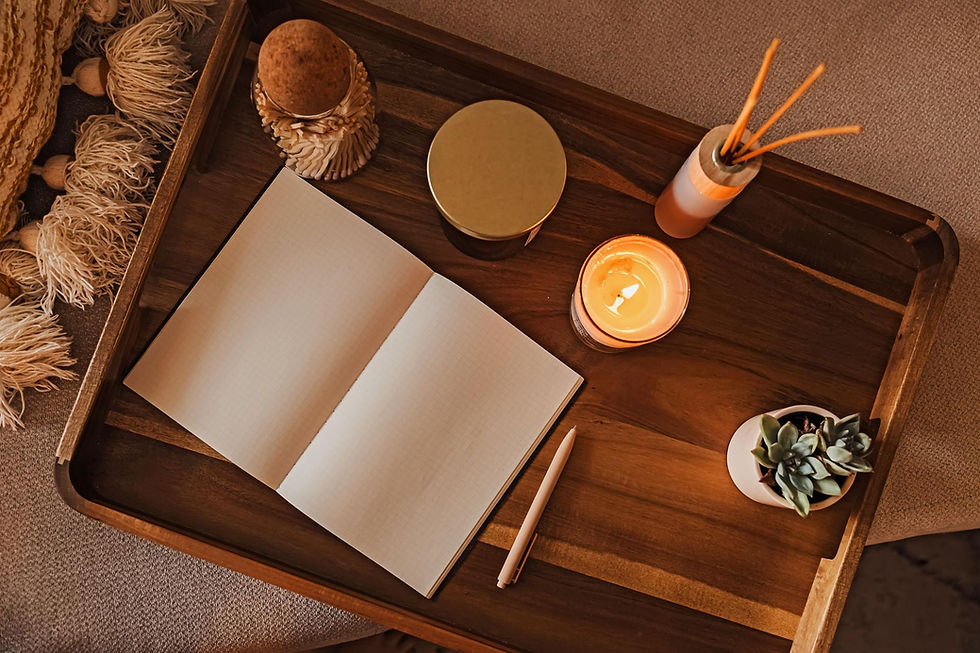
This is not the same as keeping a diary or writing a gratitude list, though both have their place. Evening journalling means writing down, in plain and uncurated language, whatever is sitting on your mind at the end of the day.
The thinking in words, the reflection, the act of putting the day's events and feelings into language, creates something specific in the nervous system. It loops your energy inward. It converts the day from something you are still carrying to something you have set down on a page. It shuts the brain's background processing down in a way that distraction cannot. People who journal in the evening consistently report quieter minds, faster sleep onset, and a reduced tendency to wake at 3 a.m. still rehearsing the day.
Three to five minutes is enough. It does not have to be literary. It just has to be honest.
8. Write down tomorrow's tasks and close the list
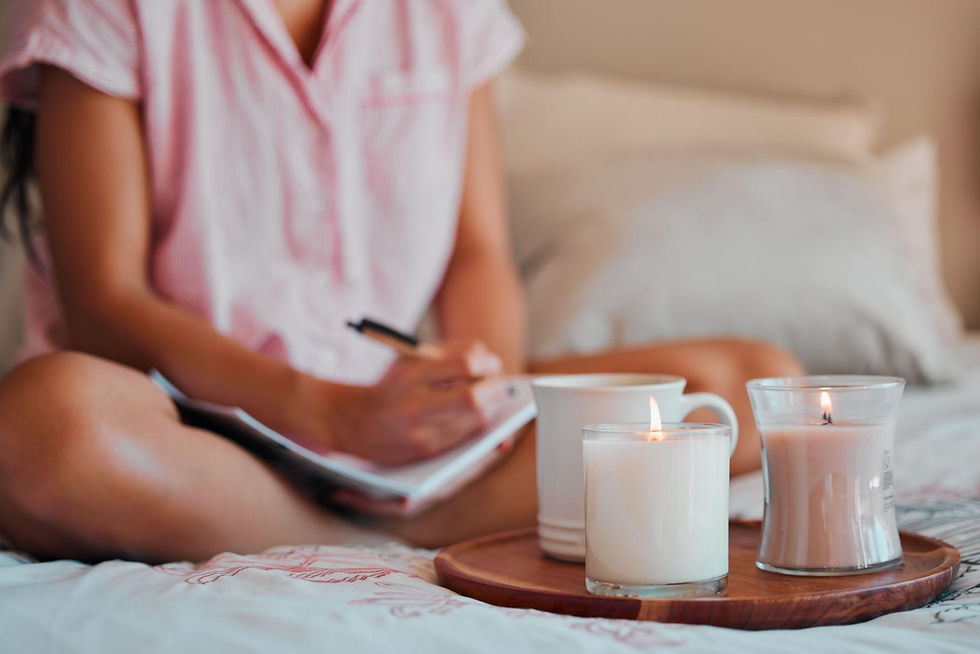
One of the main reasons the mind keeps running in the evening is that it is trying to hold onto what needs to happen tomorrow. It replays the list because it does not trust that the list is safe anywhere else.
Writing tomorrow's tasks down, concretely, and then closing the notebook, is a way of telling your mind that it can let go. The list is held. You do not need to keep holding it. This simple act reduces what psychologists call the Zeigarnik effect, the tendency of unfinished tasks to keep intruding on your thinking, more effectively than any amount of trying to stop thinking about work.
9. Read a physical book

Reading activates deep focus in a way that is different from screen-based focus. It is slower. It requires the reader to create images rather than receive them. And because a physical book has no notifications, no related content suggestions, and no social comparison mechanisms, it is one of the few activities that genuinely allows the mind to be absorbed without being stimulated.
Even 20 minutes of reading something that is not work-related or news-based significantly reduces heart rate and cortisol compared to baseline. The genre matters less than the absence of a screen.
10. A sound bowl, soft music, or deliberate silence

Sound environment matters more than most people realise. If your home evenings are filled with the ambient noise of television, news, notifications, and conversation, your nervous system never experiences the sensory quiet it needs to signal safety and begin recovery.
Even ten minutes of deliberate quiet, or of sound that is non-stimulating (soft instrumental music, nature sounds, a singing bowl), shifts the sensory input your brain is processing in a way that supports recovery. You do not have to meditate. You just have to reduce the noise for a few minutes.
11. Gratitude reflection

Different from journalling, though they can overlap. At the end of the day, sit for two to three minutes and name three specific things that were genuinely okay, or good, or enough. Small things count. The coffee that was exactly right. The conversation that was easy. The moment you finished something you had been putting off.
The specificity is what matters. Generic gratitude does not shift the nervous system in the same way that naming a specific small detail does. This practice, done consistently, changes what the attention looks for during the day, which changes the quality of your evenings, which changes your sleep.
12. Cook something simple and eat without screens

Cooking engages the senses in a way that is inherently grounding. Chopping, stirring, smelling, tasting, these are present-moment sensory activities that anchor the nervous system in the body and away from the thinking mind. They are the opposite of the abstract, future-oriented loop that stress runs on.
The without-screens part matters. Eating while watching something keeps the mind in stimulation mode rather than allowing the natural rest that eating, when given space, can provide.
13. Have a genuine, low-stakes conversation

Not about work. Not about a problem. Not about tomorrow.
Connection with another person, even a brief and easy conversation, activates the social engagement system of the nervous system, which is physiologically incompatible with the stress response. Even a ten-minute conversation with someone whose company you find easy, your partner, a friend, a family member, produces oxytocin and reduces cortisol measurably. The quality and ease of the connection matters more than the length.
14. Do one small, physical act of care for your home

Washing a few dishes. Making your bed if you haven't. Watering a plant. Folding something small. The action is less important than what it does in the nervous system: it gives the hands something to do that is concrete, completable, and low-stakes.
People who are anxious or overstimulated often find that having something small to physically do, something that has a clear beginning and end, calms the system more quickly than sitting still and trying to relax.
15. Set a clear end time and honour it

This last one is not an activity. It is a boundary.
Decide what time you will stop looking at your phone, stop working, stop responding, stop consuming. And then stop at that time, even if you do not feel like it yet.
The nervous system takes its cues partly from your behaviour. When you keep going beyond the point where you planned to stop, you are telling your system that the demands of the day have no end. When you stop deliberately, you are telling it that the day is complete. That signal matters. Over time, a consistent end-time ritual is one of the most powerful de-stress techniques you can build, not because of what you do but because of what you stop doing.
One useful way to think about recovery is through a self-care wheel, which helps identify the different areas of life that support wellbeing beyond sleep alone, including physical health, relationships, rest, personal growth, and emotional care.
How to actually use these de-stress activities
You now have 15 options. The mistake would be to try all of them tonight and turn de-stressing into a project.
Instead: pick two. One physical, one mental. Tonight only.
The warm shower and the evening journal. The slow walk and the gratitude reflection. The breathing and closing tomorrow's list. Any combination that takes a combined total of no more than 30 minutes.
If you do those two things consistently for two weeks, you will notice your baseline calm has shifted. Not dramatically. Just reliably. The evenings will feel less like a second shift and more like genuine recovery.
That shift, small and consistent, is what de-stressing at home actually means in practice. Not a transformation. Just a quieter body by the time you close your eyes.
People also ask
How to relieve stress quickly at home?
The fastest at-home de-stress techniques work directly on the nervous system without requiring preparation or equipment. Extended exhale breathing (longer out-breath than in-breath) takes under three minutes and directly activates the parasympathetic response. A warm shower lowers cortisol reliably. Even five minutes of gentle movement or stretching metabolises stress hormones that have been building throughout the day. For the mind, writing down what is on your mind for three minutes externalises the mental load more effectively than any passive activity.
How to relax your body when it is holding stress?
The body holds stress in predictable places: the jaw, shoulders, chest, and hips. The most effective ways to release this physical tension at home are progressive muscle relaxation, gentle stretching, a warm bath, and slow deliberate breathing. The warm bath is particularly effective because the body temperature rise followed by cooling is one of the most reliable physiological signals for the nervous system to downregulate. Even a 15-minute soak produces measurable changes in heart rate and cortisol.
What are the most effective de-stress techniques for home?
The techniques that produce the most consistent results at home are: journalling in the evening, walking outdoors, reducing screen and stimulation in the final hour before sleep, and deliberate breathing. The common thread is that they all require a degree of genuine disengagement from digital stimulation, which is harder than it sounds but produces disproportionate results. Most people underestimate how much of their at-home stress is maintained by their phone.
What should I avoid if I want to de-stress at home tonight?
Three things make it significantly harder to de-stress at home. Screens, particularly social media, news, and anything emotionally intense or unpredictable, keep the brain in a stimulated state regardless of how passive the activity feels. Caffeine after 2 p.m. extends the stress response well into the evening. And working right up to the moment you try to sleep removes the transition period the nervous system needs to wind down. Removing these three things is often more effective than adding any de-stress technique.
How long does it take to feel less stressed at home?
Some techniques produce a shift within minutes. Extended exhale breathing, cold water on the wrists, and grounding exercises can reduce acute stress within 5 to 10 minutes. Techniques like evening journalling and consistent wind-down routines produce cumulative changes over days and weeks. Most people who implement even a simple 20-minute evening de-stress routine consistently report meaningful changes in sleep quality, morning mood, and stress reactivity within two to three weeks.
Why can't I relax at home even when I have time?
Usually because the body is still in activation mode from the day, and the activities most people reach for when they finally have time at home, screens, scrolling, passive television, are stimulating rather than recovering. The nervous system does not recognise these as rest. It needs specific conditions: reduced stimulation, physical cues of safety (warmth, quiet, gentle movement), and a transition away from demands. If you find it hard to relax even with time, the question is not how to force yourself to relax, but what in your evening environment is keeping the activation running.
A closing note
The evenings are yours. Not the evenings you think you should be having, and not the evenings where you catch up on everything you didn't do during the day. Just the ones where you come back to yourself for an hour.
Pick one thing from this list tonight. Just one. Something that requires almost no effort to start. Do it without checking your phone for the same number of minutes.
That is enough. That is the beginning of what recovery actually looks like when it is real.

If you have been finding it hard to genuinely switch off at the end of the day for longer than feels normal, I work with people one-to-one on exactly this kind of work. Write to me if it feels right.


Comments