I Cheated. What Now? | Counselling Singapore

If you have found your way here, you are probably not in a good state. Most people who search this are somewhere between panic and numbness, and it is often late at night.

So before anything else: you do not have to decide anything tonight. The urge to fix this immediately, to confess in a rush or make some dramatic promise to yourself, is understandable and almost always unhelpful. Very few situations like this are improved by a decision made at 2am.
What follows is not absolution and it is not a lecture. It is a calmer way to think about where you actually are.
If you would rather talk to someone than read, you are welcome to book a free 10-minute call with me. I am a relationship counsellor in Singapore, and there is no judgement in that conversation.
What should I do in the first 48 hours after cheating?
The early hours after this becomes real to you are when most of the avoidable damage happens. A few things worth not doing.
Do not confess in a panic. If you are going to tell your partner, and that is a real decision worth taking seriously, it deserves more thought than a distressed midnight admission. A confession delivered in panic tends to be partial, badly framed, and centred on your own distress, which makes an already terrible conversation worse. There is a whole separate decision there, and I have written about whether and how to confess properly.
Do not make dramatic promises to yourself. The vows people make in this state, never again, I will be a completely different person from tomorrow, are made from shame rather than from a plan, and they rarely survive contact with an ordinary Tuesday.
Do not go looking for reassurance from the person involved. It is a very common instinct, reaching out to the one other person who knows, because they are the only one you can talk to. It almost always deepens the situation rather than resolving it.
Do not disappear on your partner. Withdrawing out of guilt reads, from the outside, as coldness. Many people end up doing more visible damage through sudden distance than they realise, and then have to explain that too.
What you can do tonight is far smaller. Sleep if you can. Tell nobody involved anything. Give yourself until you are less raw before making any decision at all.
Am I a bad person?
This is the question underneath most of the others, so let me answer it directly.
You did something that hurt someone who trusted you. That is real, and I am not going to soften it, because being told it was not that bad is not actually what most people in your position need.
But doing a harmful thing and being a fundamentally bad person are not the same claim. In the room, I see people who cheat who are, in every other visible way, kind, careful, conscientious people. That is not an excuse. It is just true, and it is worth knowing, because the story you tell yourself now will shape what you do next.
Here is why it matters practically. Shame and guilt feel similar and behave completely differently.
Guilt says: I did something bad. It points at the behaviour, it is bearable, and it tends to move people toward repair.
Shame says: I am something bad. It points at your whole self, it is unbearable, and people do not repair from it. They hide, they get defensive, they self-destruct, or they numb it. Shame is also, quietly, self-focused. It keeps your attention fixed on how terrible you feel rather than on the person you hurt or on what you are going to do differently.
So if you are currently drowning in the second one, it is not a sign of how seriously you are taking this. It is more likely to be the thing stopping you from taking it seriously in a useful way.
Would rather just ask a question first? No forms, no commitment, and nothing is shared with anyone.
Why did I do it?

At some point, usually after the first wave of panic, this question arrives. It is worth taking seriously rather than answering with I do not know, or I am just a terrible person, both of which close the conversation down.
The answer is almost never simple attraction, though that may have been the surface. Underneath, there is usually a gap. Something you were not getting and had stopped asking for. Feeling unseen. Feeling like a function rather than a person. Feeling old, or dull, or invisible. Wanting to be desired. Wanting to feel like yourself again after years of being a role.
Sometimes it is not about the relationship at all. Some people find that the affair arrived during a period of real personal difficulty, a loss, a professional collapse, a stretch of feeling worthless, and the connection was less about the other person than about temporary relief from being themselves.
None of this excuses it. Understanding is not absolution, and I would be doing you a disservice to blur those. But understanding is the only route to it not happening again, because you cannot change a pattern you have not identified. People who refuse to look at why tend to repeat it, often with a different person and the same result.
There is a useful way to think about this. Imagine a boat taking on water. You can bail it out repeatedly, which is what promising never again amounts to, or you can find the hole. Bailing works for a while, and then you get tired.
Is this a one-off or a pattern?
This question is uncomfortable and it matters more than almost anything else here.
If this is the first time, in one relationship, during a genuinely difficult period, that is one situation. If it has happened before, in this relationship or previous ones, that is a different situation and it needs a different response. The second is not worse morally in some simple way, but it does tell you that something structural is running, and that willpower has already been tried and has already failed.
Be honest with yourself about which one you are in. People tend to round down here, treating a third occasion as though it were a first. If you want the fuller picture, I have written about whether cheating is a one-off or a pattern.
What is the first thing to do after cheating?
Before any decision about telling, before any grand plan, there is one step that comes first and is not optional.
End it, properly. Not fade it. Not reduce contact and see how things go. If the connection is still live in any form, every other decision you make is theoretical. You cannot think clearly about your relationship while still inside the thing that is competing with it, and you cannot make a meaningful commitment to change while keeping the option open.
Ending it means a clear, brief conversation, not a long emotional goodbye, which is really just one more intimate exchange. Then remove the access: delete the thread, mute, block where you reasonably can. Willpower fails at 11pm; friction works.
If you work together and cannot cut contact entirely, the rule shifts from no contact to no intimacy. Functional, work-related, in writing, never one to one where avoidable, nothing personal.
Expect this to be harder than you assume. For two or three weeks you may feel restless, low and oddly bereaved, and you may take that as evidence the connection was profound. It is not evidence of that. It is what happens when a source of relief is suddenly removed, and it passes.
How do I stop it happening again?
Once it has ended, the real work is the thing underneath it, and this is the part almost everyone skips.
Name honestly what you were getting from that connection. Be specific and be prepared for the answer to be ordinary. Being asked about your day. Feeling interesting. Feeling wanted. Feeling like more than a parent or an employee or a provider.
Whatever it is, that is the actual information. And it is worth asking a second question: when did I stop asking for that at home, and why? Often the answer is that it was asked for, repeatedly, for years, and eventually the asking stopped. That does not justify what happened, but it does tell you what has to change if this is not going to repeat.
For some people there is a longer pattern underneath: a habit of quietly setting aside your own needs until you are running on empty, then finding somewhere else to top up. If that sounds familiar, the affair is a symptom rather than the whole story, and the deeper work is learning to state a need before you are desperate. I have written about that pattern in self-abandonment in relationships.
What if I love my partner and still did this?
Both things can be true, and this confuses people enormously because it seems like it should not be possible.
Affection and behaviour are not as tightly linked as we would like. People do things that contradict what they value, particularly when they are depleted, or lonely, or have been running on empty for long enough that judgement quietly degrades. The fact that you love your partner is not a defence, but nor is your behaviour proof that you never did.
What the contradiction usually indicates is a gap between the life you are living and the person you believe yourself to be. That gap is worth closing, and closing it is work rather than a decision.
What is it like living with it afterwards?
Whatever you decide about telling, some version of this stays with you, and it is worth knowing what that actually looks like.
The intensity fades considerably, usually over months rather than weeks. What does not fade on its own is the pattern, unless something is actively done about it. The people who come out of this genuinely changed are not the ones who felt worst. They are the ones who understood what happened, addressed the gap, and rebuilt something more honest, whether or not their partner ever knew.
A note on punishment. Many people in your position quietly set about punishing themselves: withdrawing from things they enjoy, accepting bad treatment, treating any happiness as undeserved. It feels like accountability. It is not. It changes nothing for the person you hurt, and it tends to make you a worse partner, not a better one. Accountability is what you do differently. Punishment is what you do to yourself instead of doing anything differently.
Some things specific to Singapore
Two realities worth naming.
Circles overlap. The person is often a colleague, someone from your community, a friend of friends. A clean separation may simply not be available, which makes the ending harder and slower than the standard advice assumes. It also means the assumption that something will stay contained is frequently more optimistic than the situation warrants.
You will be expected to look completely fine. Most people I see in this position are holding a demanding professional life together while all of this runs underneath. There is nowhere to put it down and often nobody to tell. If you are performing normality all day and coming apart privately, that is not weakness. It is the cost of carrying something entirely alone.
And plainly: counselling is confidential. Nothing you say travels to your partner, your family, your employer or anyone in your circle.
How counselling helps
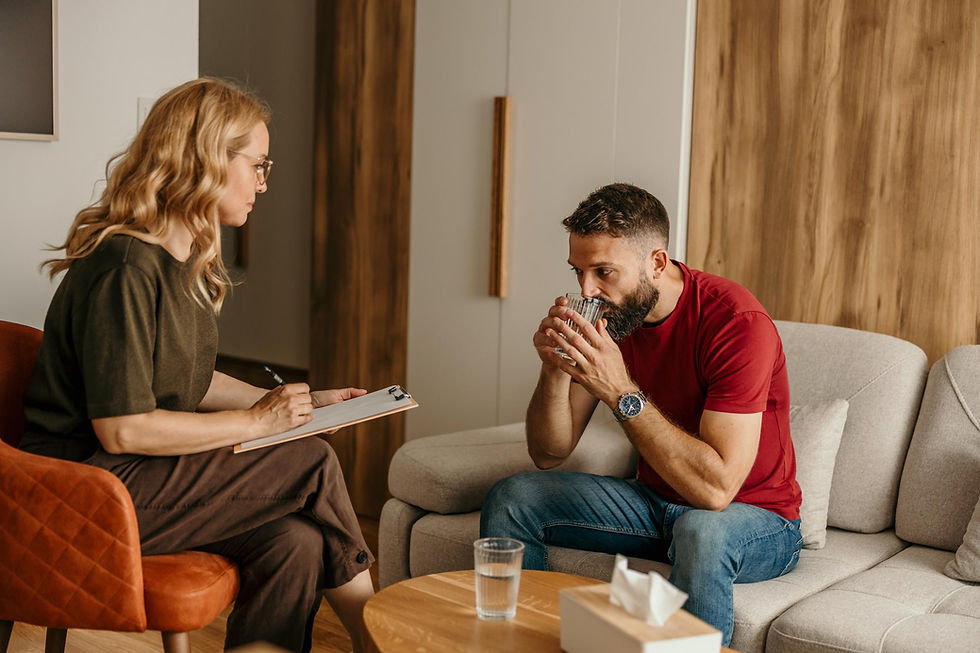
Not by telling you what you already know. You have established that you did something wrong.
What tends to actually help: working out what the connection was meeting, which is genuinely hard to see on your own; support through ending it, so that a lapse does not become a restart; thinking through disclosure deliberately rather than impulsively; separating useful guilt from useless shame; and addressing the underlying gap so this does not simply recur in a different form.
Many people start this individually, without their partner and without having told anyone. That is a completely valid place to begin, and a great deal can shift with one person doing the work.
I draw on approaches including Emotionally Focused Therapy, CBT, Schema Therapy and Internal Family Systems. What matters more to most people here is whether they will be judged. You will not be.
If cost is what is stopping you
Worth knowing, because most people do not.
Many Singapore employers provide an Employee Assistance Programme, which typically includes several confidential counselling sessions at no cost to you. Your employer is not told who used it or what was discussed. A lot of people have this sitting unused because nobody mentioned it existed.
Some health plans also include outpatient mental health cover, though terms vary and many require a licensed psychologist specifically, so read the policy rather than assuming.
One email to HR or your benefits portal will tell you what you already have.
A closing note
You are probably at the point where every option feels bad. That is accurate, and it is also temporary.
What you do not have to do is solve all of it tonight. There is no decision here that improves for being made while you are this raw. The genuinely useful things in the next few days are small: end anything still live, do not seek reassurance from the person involved, do not withdraw from your partner in a way you will later have to explain, and give yourself a few days before deciding anything larger.
Start with one honest sentence to yourself. Not about what you are, about what you were getting from it. That sentence is where the rest of this actually begins.
If you are somewhere in the middle of this and cannot think straight, that is a very normal place to be rather than a personal failing. You are welcome to book a free 10-minute call with me. You can also read more about infidelity counselling in Singapore or individual therapy if you would rather look first.
Frequently asked questions
1. I cheated on my partner. What do I do first?
End anything that is still ongoing, properly rather than gradually, and avoid making any major decision while you are still raw. Do not confess in a panic, do not seek reassurance from the person involved, and do not withdraw from your partner out of guilt. The bigger decisions become much clearer after a few days.
2. Am I a bad person for cheating?
You did something that caused real harm, and that is worth taking seriously. But doing a harmful thing and being a fundamentally bad person are different claims. Guilt, which points at the behaviour, tends to lead people toward repair. Shame, which points at your whole self, usually leads to hiding or self-destruction instead.
3. Why did I cheat when I love my partner?
Affection and behaviour are less tightly linked than we assume, particularly when someone is depleted or has been running on empty for a long time. There is usually a gap underneath, something unmet that stopped being asked for. Loving your partner is not a defence, but it also is not disproved by what happened.
4. How do I stop feeling guilty after cheating?
The aim is not to stop feeling it but to convert it into something useful. Guilt that orients you toward understanding what happened and changing it is doing its job. Guilt that has become self-punishment changes nothing for the person you hurt and tends to make you a worse partner rather than a better one.
5. Will I cheat again?
That depends far more on whether you address what the affair was meeting than on how badly you feel now. People who look honestly at the gap and change something usually do not repeat it. People who rely on resolve alone, without understanding the pattern, often do.
This article is for general wellbeing and educational purposes and is not a substitute for professional medical or psychological advice.


Comments